
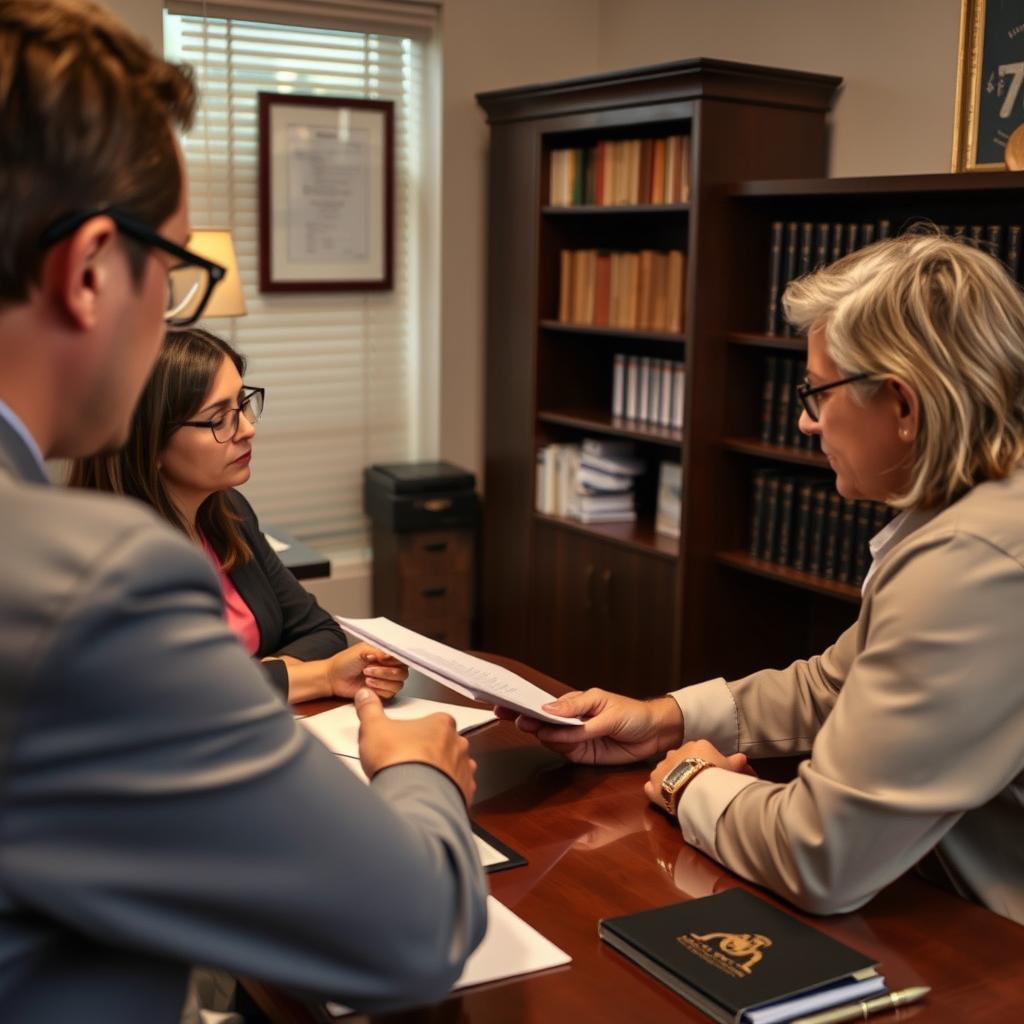
Aiding and Abetting lawyer Madison County, VA
Federal criminal law does not limit liability to those who personally commit a crime. Under 18 U.S.C. § 2, a person who aids, abets, counsels, commands, induces, or procures the commission of a federal offense is punishable as a principal. In practical terms, this means that an individual who assists in a federal crime—whether by driving a getaway car, providing information used in a fraudulent scheme, or facilitating a drug transaction—faces the same potential sentence as the person who carried out the act. For residents of Madison County, Virginia, any federal aiding-and-abetting charge is prosecuted in the U.S. District Court for the Western District of Virginia, where sentencing follows the U.S. Sentencing Guidelines and no parole is available. The consequences are severe, and early engagement of experienced counsel is critical. Mr. Sris, the firm’s Owner and Founder, leads the representation of individuals charged with aiding and abetting in federal court, supported by the firm’s Of Counsel attorneys. To request a consultation, call (888) 437-7747. Law Offices Of SRIS, P.C. – Advocacy Without Borders.
What Federal Aiding and Abetting Means in Madison County, Virginia
Madison County lies within the Western District of Virginia, an expansive federal jurisdiction that stretches from the Blue Ridge Mountains to the Kentucky border. The U.S. Attorney’s Office—operating out of the Roanoke and Charlottesville divisions—prosecutes all federal criminal cases arising in the county. When a federal grand jury returns an indictment that includes an aiding-and-abetting charge under 18 U.S.C. § 2, the matter proceeds in the Roanoke or Charlottesville division of the U.S. District Court, or occasionally in Harrisonburg. Aiding and abetting is not a standalone crime; it is a legal theory that attaches to an underlying substantive offense. The government must prove that (1) the principal committed the offense, and (2) the defendant intentionally associated with and participated in the crime with the desire to make it succeed. A mere presence or passive knowledge is not enough. In a rural county like Madison, federal investigations often originate with the FBI, DEA, ATF, or IRS Criminal Investigation, and they tend to be thorough. A defendant charged as an aider must anticipate the full weight of a federal prosecution, from a detention hearing before a magistrate judge through sentencing under an advisory guideline range.
Because Madison County does not have a federal courthouse, initial appearances and arraignments typically occur in Charlottesville or Harrisonburg, with trial proceedings in Roanoke. The travel distances can add a layer of complexity. The firm’s Fairfax location serves clients throughout Madison County—including the communities of Madison, Brightwood, Etlan, Pratts, and Wolftown—and coordinates every stage of the defense. Mr. Sris and the firm’s Of Counsel attorneys are familiar with the local federal practice and work to ensure that clients understand each step, from the grand jury process to the potential application of mandatory minimums or safety-valve provisions.
How Mr. Sris and the Firm’s Of Counsel Attorneys Handle Aiding and Abetting Cases
Every federal aiding-and-abetting defense begins with a careful review of the indictment and the government’s evidence. The prosecution must establish that the underlying crime actually occurred and that the defendant knowingly facilitated it. Mr. Sris and the firm’s Of Counsel attorneys examine whether law enforcement overreached, whether a mere association has been mischaracterized as culpable participation, and whether the government can prove the specific intent required under 18 U.S.C. § 2. In many cases, the defense also focuses on the severity of the underlying offense. Because an aider faces the same maximum penalty as the principal, reducing or challenging the charge against the alleged principal can dramatically reduce exposure. The team works to identify weaknesses in the government’s case—such as conflicting witness statements, improper search procedures, or a lack of evidence that the defendant shared the criminal purpose.
Early engagement is particularly important in federal cases. The decision to seek or oppose pretrial detention, the negotiation of a possible cooperation agreement, and the preservation of exculpatory evidence all happen within the first few days. Mr. Sris and the firm’s Of Counsel attorneys are prepared to appear in the U.S. District Court for the Western District of Virginia at any stage, and they maintain open communication with clients to explain the guidelines calculation, the impact of acceptance of responsibility, and the avenues for seeking a below-guideline sentence when the facts warrant it. The firm has extensive combined legal experience between Mr. Sris and his Of Counsel. Results may vary.
About Mr. Sris and the Firm’s Of Counsel Attorneys
Mr. Sris—Owner and Founder of Law Offices Of SRIS, P.C.—has practiced law since 1997 and is a former prosecutor. That prosecutorial background gives him insight into how federal prosecutors approach charging decisions and plea negotiations. Mr. Sris testified before the Virginia House Courts of Justice Committee in support of 2019 HB 635 (chief patron Del. David Bulova). He is admitted to practice in Virginia, Maryland, the District of Columbia, New Jersey, and New York, and personally handles complex federal criminal matters, including those arising in Madison County. The firm’s Of Counsel attorneys bring additional depth to federal criminal defense, contributing thorough legal research and courtroom experience. Together, Mr. Sris and the firm’s Of Counsel attorneys work to protect clients’ rights at every phase of a federal prosecution.
Frequently Asked Questions
What is aiding and abetting under federal law?
Under 18 U.S.C. § 2, a person who aids, abets, counsels, commands, induces, or procures the commission of a federal crime is punishable as a principal. This means an individual who assists in a federal offense—such as providing transportation, serving as a lookout, or helping plan a fraud—can receive the same sentence as the person who committed the offense. The government must prove two elements beyond a reasonable doubt: that the underlying crime was committed by someone, and that the defendant intentionally participated in it with knowledge of the illegal objective. There is no separate penalty statute for aiding and abetting; the punishment is defined by the underlying substantive offense, which may carry significant prison time under the federal sentencing guidelines.
How is federal aiding and abetting different from a state charge in Virginia?
Federal aiding and abetting is prosecuted in U.S. District Court by a U.S. Attorney, not in state court, and carries federal sentencing consequences—including the absence of parole. In Virginia state court, aiding and abetting is also a theory of liability, but the procedural and substantive differences are substantial. Federal sentences are determined under the U.S. Sentencing Guidelines, which often result in longer terms of incarceration for comparable conduct. Federal cases also involve far-reaching investigative resources, including multi-agency task forces and grand jury subpoena power that extend across state lines. A defendant in a federal aiding-and-abetting case needs counsel familiar with both the substantive federal criminal statute at issue and the unique procedural rules of the federal courts.
What are the potential penalties for aiding and abetting a federal crime?
Because an aider and abettor is punished as a principal, the potential sentence is the same as the penalty range for the underlying offense; there is no separate penalty for aiding and abetting itself. For example, if the underlying charge is mail fraud under 18 U.S.C. § 1341, the maximum term of imprisonment is 20 years. If the underlying charge carries a mandatory minimum sentence—as many drug trafficking and firearms offenses do—the aider also faces that mandatory minimum. The actual sentence is determined by the advisory U.S. Sentencing Guidelines, which consider the offense level and criminal history category. Because federal sentences are served without parole, the time a person can expect to spend in prison is effectively the full term imposed, minus limited good-time credit.
Do I need a lawyer if I have been charged with aiding and abetting in Madison County?
Yes. Federal criminal charges, including aiding and abetting, demand prompt representation by a lawyer who practices in federal court. A federal indictment initiates a process that moves quickly: an initial appearance before a magistrate judge, a detention hearing, and an arraignment often occur within days. Statements made to law enforcement at this stage can be used against you, and any delay in securing counsel can compromise the defense. The firm’s attorneys are prepared to represent clients in the U.S. District Court for the Western District of Virginia and to advise on the potential consequences, including sentencing exposure and the availability of pretrial release. To discuss your situation, call (888) 437-7747.
How can a defense attorney challenge an aiding and abetting charge?
A defense attorney may challenge an aiding-and-abetting charge by contesting the government’s proof that the defendant intentionally participated in the crime. Because 18 U.S.C. § 2 requires both knowledge of the illegal objective and an act designed to make it succeed, the defense often focuses on the defendant’s state of mind. Evidence that the defendant was merely present, had no understanding of the scheme, or took no affirmative step to assist can undermine the prosecution’s case. Other strategies include challenging the evidence establishing the underlying offense, moving to suppress evidence obtained through an unconstitutional search, and negotiating with the U.S. Attorney’s Office for a reduction or dismissal of the charge. Each case is fact-specific, and the approach is tailored to the indictment and the government’s discovery.
What should I do if a federal agent wants to speak with me about an investigation?
You should decline to answer questions and ask to speak with an attorney. Federal agents are trained interrogators, and statements you make—even those you believe are helpful—can be used against you in a criminal prosecution. Even if you have not been charged, anything you say can form the basis for an aiding-and-abetting allegation if the government later determines you assisted a federal crime. Invoking your right to counsel is not an admission of guilt. Contact an attorney before speaking with law enforcement, and do not consent to a search without first obtaining legal advice. For help, reach Law Offices Of SRIS, P.C. at (888) 437-7747.
Attorney advertising. Prior results do not guarantee a similar outcome. Case results depend on a variety of factors unique to each case. Results may vary.