
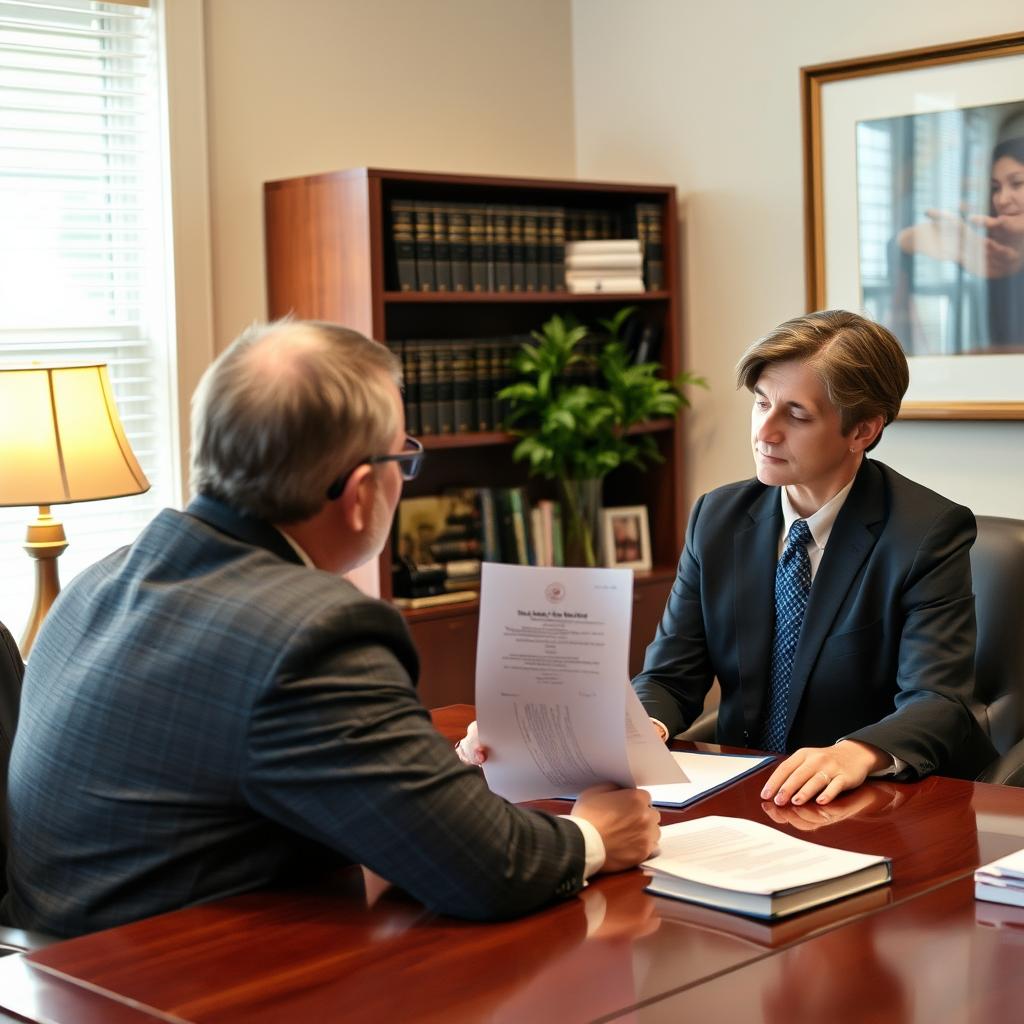
Accessory After the Fact lawyer Albemarle County, VA
A federal agent contacts you about a criminal case. You thought you were helping a friend or family member after an incident, but now you face a federal accessory after the fact charge under 18 U.S.C. § 3. In Albemarle County and across Central Virginia, these prosecutions move through the U.S. District Court for the Western District of Virginia, Charlottesville Division. The U.S. Attorney’s Office brings these cases actively, and a conviction can carry severe penalties. You need experienced legal guidance that understands federal court procedure, the U.S. Sentencing Guidelines, and how to build a defense when the government alleges you assisted a principal after the commission of a federal offense. Law Offices Of SRIS, P.C. represents clients charged with accessory after the fact in Albemarle County. Call (888) 437-7747 to request a consultation. Law Offices Of SRIS, P.C. – Advocacy Without Borders.
What an Accessory After the Fact Charge Means in Albemarle County
Federal accessory after the fact is defined by 18 U.S.C. § 3. The statute makes it a crime to harbor, assist, or conceal a person after that person has committed a federal offense, with the intent to help them avoid detection, arrest, trial, or punishment. Unlike aiding and abetting—which requires involvement before or during the crime—accessory after the fact focuses solely on conduct after the principal offense is complete. The maximum penalty is half the maximum sentence for the underlying offense, or up to 15 years if the underlying offense carries life imprisonment or the death penalty.
In Albemarle County, a federal accessory charge is litigated in the Charlottesville Division of the U.S. District Court for the Western District of Virginia, located at 255 W Main Street in Charlottesville. Cases are investigated by federal agencies such as the FBI, DEA, IRS-Criminal Investigation, or ATF, depending on the underlying offense. Federal grand jury indictment is required for felony charges, and the Speedy Trial Act governs the timeline for bringing a case to trial. Local federal practice demands familiarity with the judges and procedures of the Western District. Law Offices Of SRIS, P.C. serves Albemarle County from its Shenandoah Location at 505 N Main Street, Suite 103, Woodstock, Virginia, conveniently situated to handle matters across the Central Virginia and Charlottesville region.
How Mr. Sris and the Firm’s Of Counsel Attorneys Approach Federal Accessory Cases
Defending an accessory after the fact charge in federal court requires a thorough analysis of the government’s evidence, an understanding of the underlying offense, and a strategy tailored to the specific facts. Our firm begins by examining whether the government can prove every element of the charge: that a principal committed a federal offense, that the accused knew of the completed crime, and that the accused provided aid with the specific intent to help the principal avoid detection or punishment. If any element is unsupported, the case may be challenged through pretrial motions or at trial.
The Of Counsel attorneys working with Mr. Sris evaluate whether the accused’s actions fall within the statutory definition of harboring or assisting. Not every act of friendship after a crime constitutes accessory after the fact. Additionally, the firm considers potential defenses, such as lack of knowledge, duress, or withdrawal from aid before authorities intervene. Because federal sentencing guidelines treat the underlying offense as the starting point for calculating the guideline range, efforts to mitigate exposure—including acceptance of responsibility, cooperation with the government under Section 5K1.1, and eligibility for the safety valve—are explored early in the representation. The firm’s approach is to protect the client’s rights at every stage, from initial appearance and detention hearing through arraignment, discovery, motions practice, trial, and, if necessary, sentencing.
About Mr. Sris and the Firm’s Of Counsel Attorneys
Mr. Sris, Owner and Founder of Law Offices Of SRIS, P.C., is a former prosecutor who has practiced since 1997. Admitted in Virginia, Maryland, the District of Columbia, New Jersey, and New York, he concentrates his docket on complex criminal defense matters, including federal charges. Mr. Sris testified before the Virginia House Courts of Justice Committee in support of 2019 HB 635 (chief patron Del. David Bulova). He brings a prosecutorial perspective to the defense, having tried criminal cases and understood how federal investigations are built.
The firm’s Of Counsel attorneys have extensive combined legal experience. Together with Mr. Sris, they work collaboratively to investigate federal allegations, challenge the government’s case, and craft a defense strategy informed by decades of combined courtroom practice. Results may vary. The firm handles federal criminal matters throughout Virginia, and its Shenandoah Location at 505 N Main Street, Suite 103, Woodstock, VA 22664, is available for consultations by appointment. Reach the firm at (888) 437-7747.
Frequently Asked Questions
What is accessory after the fact under federal law?
Accessory after the fact, under 18 U.S.C. § 3, is a federal crime that occurs when a person provides assistance to someone they know has committed a federal offense, with the intent to help that person avoid detection, arrest, trial, or punishment. The assistance can take many forms—providing shelter, money, transportation, destroying evidence, or concealing the principal’s whereabouts. Unlike conspiracy or aiding and abetting, accessory after the fact applies only to conduct after the principal crime is complete. The charge is separate from the underlying offense, and the penalties are determined by the severity of that underlying crime. Federal prosecutors must prove knowledge of the completed crime and the specific intent to hinder law enforcement. An experienced attorney can challenge these elements.
How do federal sentencing guidelines apply to accessory after the fact cases in Virginia?
Federal sentencing guidelines base the offense level for accessory after the fact on the underlying offense, reduced by a specific number of levels under U.S.S.G. § 2X3.1. The starting point is the offense level for the underlying crime, but the guideline provides a downward adjustment, so the advisory range is less than what the principal would face. However, the guideline remains advisory after United States v. Booker, and the judge has discretion. Statutory maximums—half the maximum of the underlying offense, or 15 years if it carries life/death—limit the sentence. A defense strategy must focus on both the guidelines calculation and any applicable mandatory minimums tied to the underlying offense. For guidance on your specific situation, reach Law Offices Of SRIS, P.C. at (888) 437-7747.
What should I do if I am charged with accessory after the fact in Albemarle County?
If you are charged with accessory after the fact in Albemarle County, contact an experienced federal criminal defense attorney immediately and do not discuss the matter with anyone except your lawyer. Federal agents may seek an interview; politely decline without counsel present. Preserve any documents, communications, or evidence that may be relevant. The case will proceed in the U.S. District Court for the Western District of Virginia, Charlottesville Division. Early representation is critical, as an attorney can intervene before indictment, address pretrial detention, and begin building a defense. Law Offices Of SRIS, P.C. handles federal accessory charges and can discuss your situation at (888) 437-7747.
How can an attorney defend against a federal accessory after the fact charge?
An attorney may defend against an accessory after the fact charge by challenging whether the government can prove each element of the offense—knowledge, intent, and affirmative assistance—while also exploring legal defenses and factual weaknesses in the prosecution’s case. For instance, a defense may show the accused did not know a crime had been committed, lacked the specific intent to hinder law enforcement, or that the alleged assistance was too minimal or unrelated to helping the principal escape justice. Procedural challenges—such as improper searches, unlawful interrogation, or prosecutorial misconduct—can also form the basis of suppression motions. In many cases, pre-indictment negotiations with the U.S. Attorney’s Office can result in a favorable resolution. To discuss the details of your matter, contact Law Offices Of SRIS, P.C. at (888) 437-7747.
Do I need a lawyer for a federal accessory charge in Albemarle County?
Yes, anyone facing a federal accessory after the fact charge in Albemarle County needs an attorney familiar with federal court practice and the U.S. Sentencing Guidelines. Federal cases carry serious consequences, and the government has substantial investigative resources. The legal and procedural landscape—including grand jury practice, the Federal Rules of Criminal Procedure, and federal sentencing—differs markedly from state court. An attorney can explain the charges, evaluate the evidence, negotiate with prosecutors, and represent you at every court appearance. Without counsel, you risk making statements or decisions that could harm your defense. For a consultation, reach Mr. Sris and the firm’s Of Counsel attorneys at (888) 437-7747.
Federal criminal defense in other Virginia localities:
Fairfax County ·
Fairfax City ·
Falls Church ·
Prince William County ·
Manassas
Primary source: U.S. District Court for the Western District of Virginia
Attorney advertising. Prior results do not guarantee a similar outcome. Results may vary.
Case results depend on a variety of factors unique to each case.