
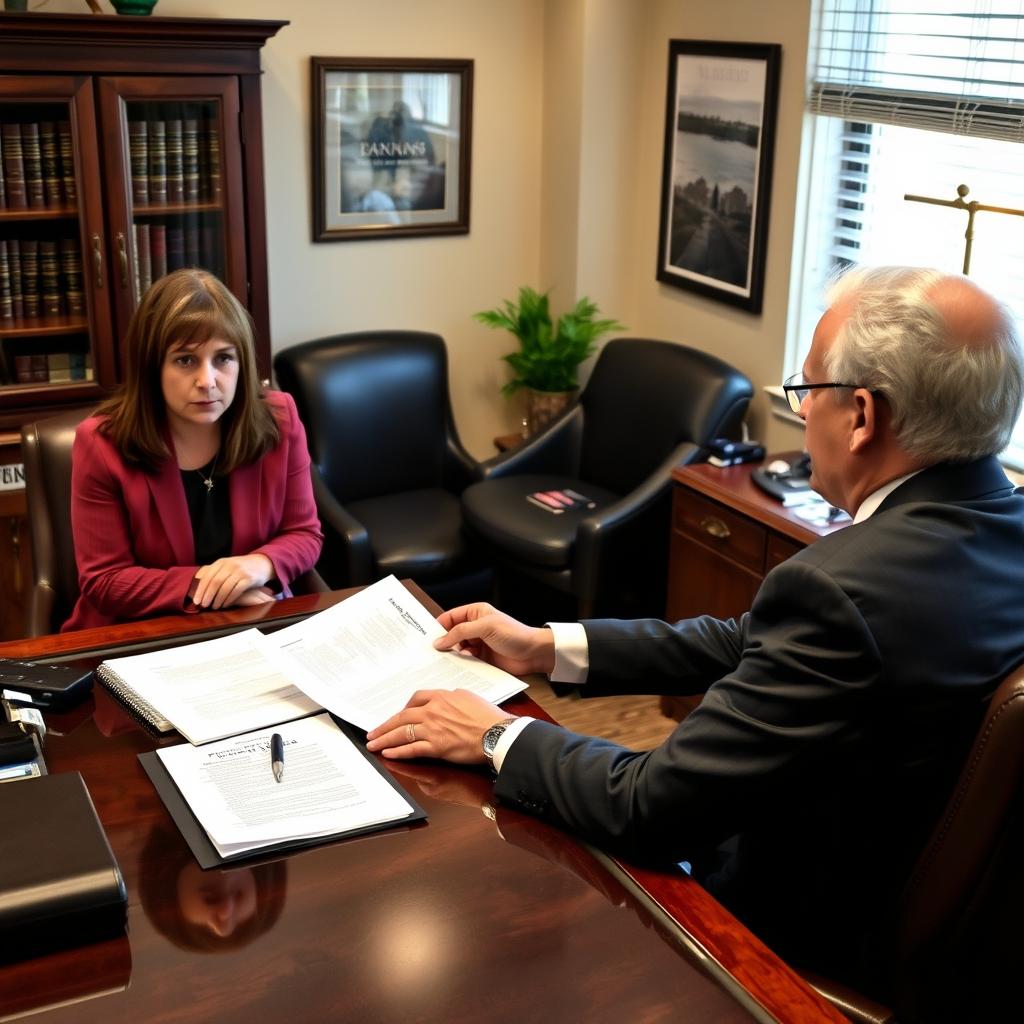
CFAA Violations lawyer Rockingham County, VA
Federal criminal charges under the Computer Fraud and Abuse Act (CFAA) carry serious consequences, and facing an investigation or indictment in Rockingham County warrants prompt attention from an experienced federal defense lawyer. CFAA violations are prosecuted in the U.S. District Court for the Western District of Virginia, with proceedings typically centered at the Harrisonburg Division. A conviction can result in significant imprisonment, substantial fines, and a lasting federal criminal record. Law Offices Of SRIS, P.C. represents individuals throughout Rockingham County—including Harrisonburg, Bridgewater, Dayton, Elkton, Timberville, and Broadway—who are confronting CFAA allegations. Mr. Sris and the firm’s Of Counsel attorneys bring extensive combined legal experience to federal criminal matters and appear regularly before the Western District of Virginia. To request a consultation, call (888) 437‑7747. Law Offices Of SRIS, P.C. – Advocacy Without Borders.
What CFAA Violations Mean in Rockingham County
A CFAA charge is a federal offense, not a state matter. This means it is investigated by agencies such as the FBI or the U.S. Secret Service and prosecuted by the United States Attorney’s Office for the Western District of Virginia. The applicable courthouse for Rockingham County residents is the Harrisonburg Division of the U.S. District Court, located in the heart of the Shenandoah Valley. Federal cases proceed under a distinct set of rules—the Federal Rules of Criminal Procedure and the Federal Sentencing Guidelines—and are heard by a federal district judge. Unlike Virginia state court, the federal system does not offer parole, and conviction rates are high. An individual charged in Rockingham County must navigate initial appearances, detention hearings, and discovery obligations that differ materially from those in the General District Court or Circuit Court.
Rockingham County’s blend of a university community, agricultural enterprises, and growing technology sectors means CFAA investigations can arise from a wide range of activities—from alleged unauthorized access to university computer networks to accusations involving business databases or personal devices. The Western District of Virginia covers a large geographic area, but the Harrisonburg Division handles matters originating in the central Valley. Mr. Sris and the firm’s Of Counsel attorneys understand the procedural landscape of this federal court and how the U.S. Attorney’s Office approaches computer fraud cases in the region. They work to protect clients’ rights from the earliest stage of an investigation through trial, if necessary.
How Mr. Sris and the Firm’s Of Counsel Attorneys Handle CFAA Cases
Defending against CFAA charges begins with an immediate review of the government’s evidence—search warrant affidavits, digital forensic reports, and witness statements. Mr. Sris and the firm’s Of Counsel attorneys examine whether the investigation complied with constitutional requirements, including whether law enforcement exceeded the scope of a warrant or gathered data in violation of the Fourth Amendment. They also assess whether the alleged conduct fits the statutory elements of 18 U.S.C. § 1030, which defines several distinct offenses—ranging from accessing a computer without authorization to trafficking in passwords or causing intentional damage to a protected system.
In many CFAA prosecutions, the government relies on complex technical evidence such as IP logs, server records, and metadata analysis. The firm’s attorneys work with independent computer forensic experts to evaluate the reliability of that evidence and to identify alternative explanations for the digital activity. They also negotiate with federal prosecutors to explore dismissal of charges, reduction of the offense level under the Sentencing Guidelines, or diversionary resolutions where appropriate. Throughout the process, the firm’s attorneys explain each step to the client and prepare the case as if it will go to trial, while keeping open every opportunity for a favorable resolution.
About Mr. Sris and the Firm’s Of Counsel Attorneys
Law Offices Of SRIS, P.C. was founded in 1997 by Mr. Sris, a former prosecutor. Mr. Sris is admitted to practice in Virginia, Maryland, the District of Columbia, New Jersey, and New York, and he has concentrated his practice on criminal defense and related litigation throughout his career. His background as a former prosecutor gives him insight into how federal investigations are built and where weaknesses may exist. Mr. Sris testified before the Virginia House Courts of Justice Committee in support of 2019 HB 635 (chief patron Del. David Bulova).
The firm’s Of Counsel attorneys bring extensive combined legal experience. Mr. Sris and the firm’s Of Counsel attorneys have documented case results across multiple practice areas since 1997. Results may vary. Together, they provide multi‑state representation and appear regularly in federal court for clients from Rockingham County and throughout the Shenandoah Valley.
Frequently Asked Questions
How does a Virginia lawyer defend against CFAA violations charges?
A defense against CFAA charges typically focuses on challenging the government’s evidence, contesting the element of unauthorized access, or negotiating for a reduced charge or dismissal. An attorney examines the search warrants and the digital forensic analysis to determine if the investigation was lawful and if the government can prove every required element of 18 U.S.C. § 1030. In some cases, the defense may show that the defendant had authorization to access the computer or that the access did not exceed the scope of permission. Where the evidence is strong, the defense may concentrate on mitigating sentencing factors under the Federal Sentencing Guidelines, including acceptance of responsibility and the extent of any loss. Each case is fact‑specific, and the strategy is tailored to the charges and the client’s circumstances.
What should I do if I am facing CFAA violations charges in Virginia?
If you are facing CFAA charges, immediately retain an experienced federal criminal attorney and do not discuss the case with anyone except your lawyer. Preserve all relevant documents, devices, and electronic records, but do not attempt to delete or alter anything without your attorney’s guidance. Avoid speaking with federal agents without counsel present, even if you believe the conversation is informal. The early stages of a federal case—including the initial appearance and detention hearing—can have a lasting impact on the outcome. An attorney will help you understand the charges, assess the government’s case, and develop a plan to protect your rights. Prompt action allows the defense to gather favorable evidence and engage with the U.S. Attorney’s Office before critical decisions are made.
What are the potential consequences of a CFAA conviction?
A CFAA conviction can result in a prison term, a substantial fine, and a permanent federal felony record, depending on the specific subsection charged and the loss amount involved. Felony convictions under 18 U.S.C. § 1030 carry statutory maximums that range from one to twenty years, and the actual sentence is determined under the United States Sentencing Guidelines, which calculate an advisory range based on offense conduct, loss, and criminal history. There is no parole in the federal system, although a defendant may earn a limited amount of good‑time credit. Collateral consequences often include loss of professional licenses, difficulty securing employment, and restrictions on the use of computers or the internet during supervised release. An attorney can explain the exposure you face based on the specific allegations.
Can federal CFAA charges be dropped or reduced?
Yes, federal CFAA charges can be dropped before trial or reduced through a plea agreement, but this depends on the strength of the government’s case and the defense’s ability to identify weaknesses. Federal prosecutors may dismiss charges if the evidence is insufficient, if constitutional violations taint the investigation, or if the defendant cooperates in a broader investigation. Often, the defense negotiates a plea to a lesser charge that carries a lower guidelines range. An experienced federal defense attorney can evaluate whether the government can prove each element of the offense and whether any procedural challenge to the indictment or the evidence is viable. Early involvement of counsel increases the opportunity to seek a favorable pre‑indictment resolution or a deferred prosecution agreement.
What is the difference between state and federal computer crime charges?
State computer crime charges are prosecuted under Virginia law in a Virginia circuit court, while federal CFAA charges are brought by the U.S. Attorney in the U.S. District Court and are subject to the federal sentencing scheme, which does not include parole. Virginia has its own computer crime statutes in Va. Code Title 18.2, but the CFAA reaches a broader range of conduct—particularly offenses that involve interstate or foreign commerce, protected government computers, or financial institutions. Federal cases generally involve longer potential sentences and are investigated by federal agencies such as the FBI. The procedural rules, discovery obligations, and pretrial release standards differ significantly between the two systems. An attorney experienced in both forums can assess whether a case is more likely to proceed in state or federal court and help a client navigate the appropriate jurisdiction.
Do I need a lawyer for a federal CFAA investigation?
Yes, you should have a lawyer as soon as you become aware of a federal CFAA investigation, even if no charges have been filed. Early legal representation can influence whether the government pursues an indictment, what charges are brought, and whether a voluntary resolution is possible. An attorney can communicate with federal agents on your behalf, advise you on preserving evidence, and work to correct any misunderstandings that may have led to the investigation. Statements made to investigators without counsel can be used against you in a later prosecution. By engaging counsel early, you give the defense time to conduct its own investigation, to present exculpatory information to the prosecutor, and to build a strategic approach before formal charges are filed.
Related areas served: Federal criminal defense in Clarke County, Shenandoah County federal criminal lawyer, Frederick County federal charges attorney, Warren County federal criminal representation, Augusta County federal defense.
Primary source: U.S. District Court for the Western District of Virginia (opens in new tab).
Attorney advertising. Prior results do not guarantee a similar outcome.
Case results depend on a variety of factors unique to each case. Results may vary.