
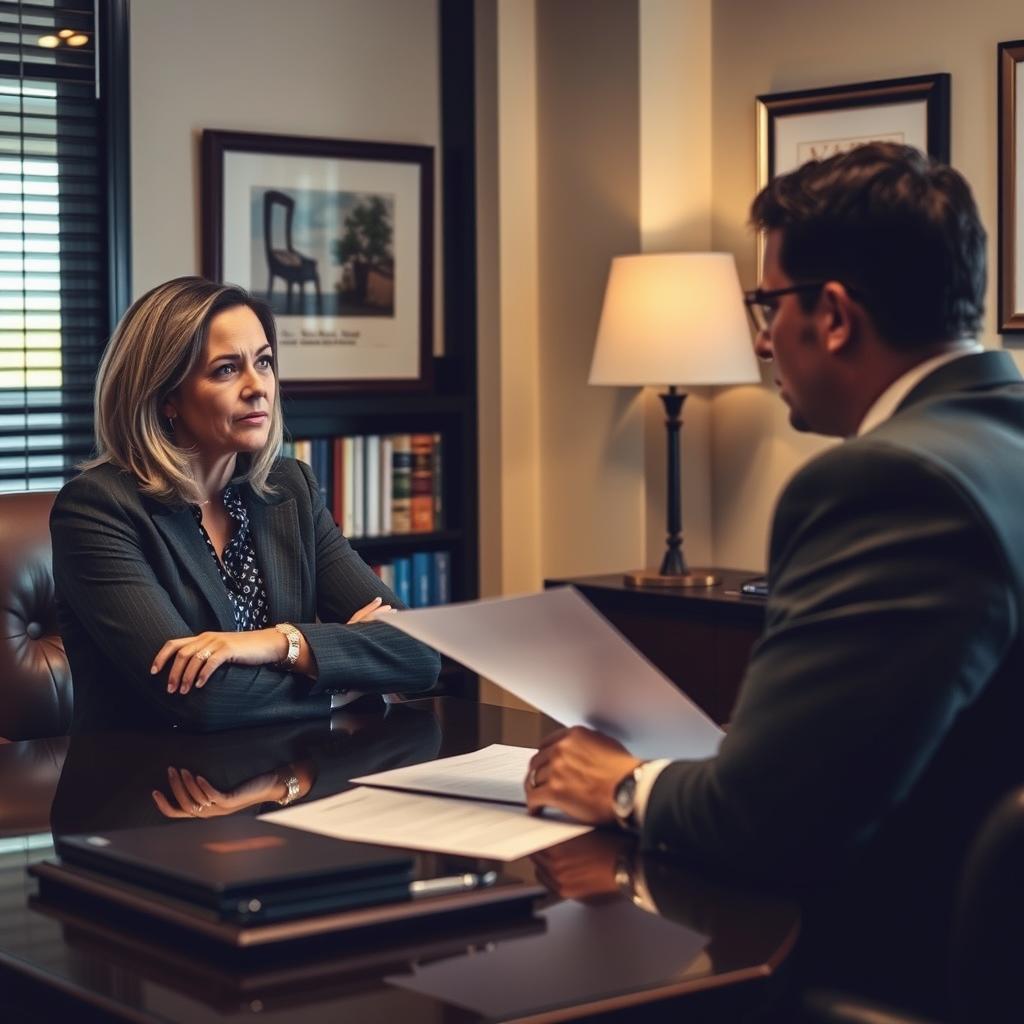
Conspiracy to Commit Fraud lawyer Virginia Beach, VA
A federal conspiracy to commit fraud charge in Virginia Beach places you in the crosshairs of the U.S. Attorney’s Office for the Eastern District of Virginia—one of the most active federal prosecution districts in the country. If you or your business is facing an investigation, an indictment, or a pending case alleging conspiracy under 18 U.S.C. § 1349, you need experienced federal criminal defense counsel familiar with the Norfolk Division of the U.S. District Court. Mr. Sris and his Of Counsel team at Law Offices Of SRIS, P.C. Concentrate their practice on federal criminal defense, including conspiracy to commit fraud charges throughout Virginia Beach and the greater Hampton Roads area. Mr. Sris, a former prosecutor, has built the firm since 1997 to handle complex federal matters that carry the weight of the U.S. Sentencing Guidelines, mandatory restitution, and the reality that there is no parole in the federal system. To discuss your case, reach our firm at (888) 437‑7747.
Law Offices Of SRIS, P.C. – Advocacy Without Borders.
Law Offices Of SRIS, P.C. — Founded 1997. Practicing in Virginia, Maryland, the District of Columbia, New Jersey, and New York. during business hours phones. Se habla español. (888) 437‑7747.
What Federal Conspiracy to Commit Fraud Means in Virginia Beach, VA
Federal conspiracy to commit fraud is a serious felony that touches upon a broad range of white‑collar and financial crimes. Under 18 U.S.C. § 1349, a person who conspires to commit wire fraud, mail fraud, bank fraud, and several other federal fraud offenses is punishable to the same extent as someone who commits the underlying fraud. This means a conviction can expose a defendant to up to 20 years in federal prison—or 30 years if the scheme affected a financial institution. The conspiracy itself does not require that the fraud be completed; an agreement between two or more persons and at least one overt act in furtherance of the scheme is sufficient to sustain a conviction.
Criminal cases arising in Virginia Beach fall within the Norfolk Division of the U.S. District Court for the Eastern District of Virginia. The courthouse at 600 Granby Street in Norfolk hears matters from the entire Tidewater region, including Virginia Beach, Sandbridge, and Oceana. Federal conspiracy investigations in this district are typically led by the FBI, the IRS‑Criminal Investigation, the U.S. Secret Service, or other federal agencies, and they often involve extensive documentary evidence, financial records, and electronic communications. Because federal prosecutors in the Eastern District of Virginia have a high conviction rate, early and proactive defense representation is important. The procedural path—from an initial appearance before a U.S. Magistrate Judge through a potential detention hearing, discovery, pretrial motions, and, if necessary, a jury trial—proceeds under the Federal Rules of Criminal Procedure and the Speedy Trial Act. The timeline depends on the complexity of the case and the court’s calendar.
Virginia Beach residents who are charged federally face the reality that the U.S. Sentencing Guidelines play a central role in any potential sentence, and there is no parole in the federal system. Good‑time credit is available but limited. Additionally, the government will often seek forfeiture of assets and a restitution order that can reach substantial dollar amounts. Mr. Sris and his Of Counsel understand how the U.S. Attorney’s Office builds conspiracy‑to‑commit‑fraud cases in this district and can evaluate whether the government’s evidence can establish an actual agreement and an overt act, whether statements or documents should be challenged on constitutional grounds, and whether negotiation under the safety‑valve, substantial‑assistance, or other Guideline mechanisms is a viable option in your circumstances.
How Mr. Sris and His Of Counsel Handle Conspiracy to Commit Fraud Cases
When our firm is retained for a federal conspiracy to commit fraud matter in Virginia Beach, the first step is a thorough consultation to understand the government’s allegations and the factual background. We examine the indictment, any supporting affidavit, and the discovery that the prosecution must disclose under Brady v. Maryland and the Federal Rules of Criminal Procedure. Our analysis focuses on whether the government can prove each element of the conspiracy beyond a reasonable doubt: that a specific agreement existed, that the defendant knowingly joined it, and that at least one overt act was taken in furtherance of the scheme. We also scrutinize the financial records, emails, and witness statements for weaknesses, inconsistencies, and potential violations of the client’s constitutional rights.
Depending on the facts, a defense strategy may involve challenging the existence of any agreement, arguing that the alleged conduct is not fraudulent within the meaning of the statute, or contesting the overt‑act requirement. In cases where evidence is strong, Mr. Sris and his Of Counsel may engage with the U.S. Attorney’s Office to negotiate a resolution that minimizes exposure under the Sentencing Guidelines, whether through a plea agreement, a cooperation arrangement that could lead to a motion for a reduction of sentence, or a non‑prosecution agreement in certain circumstances. Should the matter proceed to trial, the team’s combined litigation experience—over 120 years between Mr. Sris and his Of Counsel—enables a thorough and well‑prepared defense. Results may vary. Throughout the process, the client is informed of every significant development, and strategic decisions are made collaboratively.
About Mr. Sris and His Of Counsel
Mr. Sris, Owner and Founder of Law Offices Of SRIS, P.C., is a former prosecutor who founded the firm in 1997. He is admitted in Virginia, Maryland, the District of Columbia, New Jersey, and New York, and he personally concentrates his practice on federal criminal defense, complex civil litigation, and family law. Mr. Sris testified before the Virginia House Courts of Justice Committee in support of 2019 HB 635 (chief patron Del. David Bulova), a measure that revised an important provision of Virginia’s divorce law. Together with his Of Counsel team, Mr. Sris brings over 120 years of combined legal experience. Results may vary. Mr. Sris and his Of Counsel have documented 4,739+ case results across all practice areas since 1997.
Frequently Asked Questions
What is federal conspiracy to commit fraud under 18 U.S.C. § 1349?
Federal conspiracy to commit fraud under 18 U.S.C. § 1349 makes it a crime for two or more persons to agree to commit an offense listed in the federal fraud statutes—such as mail fraud, wire fraud, or bank fraud—and for at least one participant to take an overt act toward that goal. The government does not need to prove the fraud was completed. The conspiracy itself is a separate felony that carries the same maximum penalty as the underlying fraud offense, typically up to 20 years in prison, or 30 years if a financial institution is affected. The agreement can be proven through circumstantial evidence, and a defendant may be convicted even if the other conspirators are unknown or uncharged. Because of the wide range of conduct that can fall within a fraud conspiracy, early legal guidance is essential to assess the strength of the government’s case and to protect your rights during any investigation or prosecution.
What penalties can a person face for conspiracy to commit fraud in Virginia?
A conviction for federal conspiracy to commit fraud can result in a substantial prison sentence—up to 20 years (or 30 years if a financial institution is involved)—along with significant fines, mandatory restitution, and forfeiture of property tied to the offense. There is no parole in the federal system, and good‑time credits are limited. The actual sentence is driven by the U.S. Sentencing Guidelines, which consider the amount of loss, the number of victims, the defendant’s role in the offense, and a variety of other factors. In addition to incarceration, a felony fraud conviction can lead to a loss of professional licenses, damage to reputation, and difficulties in future employment. Because the stakes are high, working with a defense attorney who understands federal sentencing, including safety‑valve reductions and downward departures, is important.
How does a federal fraud conspiracy case proceed in the Eastern District of Virginia?
A federal fraud conspiracy case in the Eastern District of Virginia typically begins with an investigation by a federal agency, followed by a grand jury indictment, an initial appearance before a U.S. Magistrate Judge, and then pretrial proceedings that may include detention hearings, discovery, motions, and potential plea negotiations. If the case goes to trial, a jury is seated in the U.S. District Court—for a Virginia Beach defendant, at the Norfolk Division. The Speedy Trial Act imposes time limits, but many cases are resolved through a plea agreement after a period of discovery and motion practice. Sentencing occurs after a guilty plea or a jury verdict and is based on the U.S. Sentencing Guidelines, although the judge has discretion. Throughout the process, the defendant is entitled to the assistance of counsel, and an experienced federal defense attorney can guide the client through each stage.
How can a lawyer defend against conspiracy to commit fraud charges?
Defense strategies for federal conspiracy to commit fraud charges often focus on attacking the existence of an agreement, the defendant’s knowing participation, or the sufficiency of the overt act. Because the government may rely on circumstantial evidence, an attorney may challenge the inference that any agreement existed or that the defendant intended to join it. In some cases, the defense may argue that the alleged conduct was merely bad business judgment, not fraud. Where evidence was obtained through an unlawful search or seizure, motions to suppress may be appropriate. Finally, when the evidence is overwhelming, the defense may pivot to negotiating with the U.S. Attorney’s Office for a favorable plea that reduces exposure under the Sentencing Guidelines. An experienced lawyer evaluates every option based on the specific facts and the client’s goals.
What should I do if I am under investigation for conspiracy to commit fraud in Virginia Beach?
If you learn that you are under investigation for a federal conspiracy to commit fraud offense, you should immediately seek experienced legal counsel and refrain from discussing the matter with anyone other than your attorney. Federal agents may contact you directly, and anything you say can be used against you. You have the right to remain silent and to request an attorney. Do not destroy documents or delete electronic records, as that can lead to additional charges for obstruction. Early retention of a federal defense lawyer allows the attorney to contact the investigating agency, assess the scope of the inquiry, and begin building a proactive defense before charges are filed.
Do I need an attorney for a federal conspiracy charge?
Yes. Federal conspiracy to commit fraud is a felony that can lead to decades in prison and severe financial penalties; the complexities of federal criminal procedure and sentencing make experienced legal representation essential. A federal defense attorney can help you understand the charges, evaluate the strength of the government’s evidence, protect your constitutional rights, and negotiate with prosecutors. Without a lawyer, you may inadvertently make statements that harm your defense or miss critical deadlines. The federal system is unforgiving, and the U.S. Attorney’s Office in the Eastern District of Virginia has a high conviction rate. Retaining a lawyer as early as possible gives you the trusted opportunity to mount a well‑prepared defense.
What is the difference between state and federal fraud charges?
State fraud charges are prosecuted by a local Commonwealth’s Attorney in Virginia state court, while federal conspiracy to commit fraud is prosecuted by the U.S. Attorney in federal district court and generally carries more severe penalties, including no parole and a broader range of investigative tools. Federal cases often involve multi‑state conduct, larger dollar amounts, or specific federal interests such as financial institutions or government programs. Sentencing in federal court is governed by the U.S. Sentencing Guidelines, which are generally harsher than Virginia’s sentencing scheme. If you are facing a federal investigation, you need a defense attorney who is admitted in federal court for the Eastern District of Virginia and who understands the unique procedures and sentencing rules that apply.
How much does a federal criminal lawyer cost in Virginia?
Legal fees for federal criminal defense vary widely and depend on the complexity of the case, the stage at which the attorney is retained, and the attorney’s experience and reputation. Some attorneys charge an hourly rate, while others may quote a flat fee for certain stages of representation. Given the stakes, the cost of a skilled federal defense lawyer is an investment in protecting your liberty and future. During an initial consultation, our firm can discuss the fee structure that applies to your matter. We encourage you to focus on the qualifications and experience of the attorney, not solely on the price.
Can conspiracy to commit fraud charges be dropped or dismissed?
Yes, conspiracy to commit fraud charges can be dismissed if the government cannot prove every element of the offense, if there are constitutional violations that require suppression of the evidence, or if the prosecutor exercises discretion not to pursue the case. A defense attorney can file a motion to dismiss the indictment for legal insufficiency, seek to suppress evidence obtained in violation of the Fourth or Fifth Amendment, or present mitigating evidence to the U.S. Attorney in an effort to persuade the government to drop the charges. While not every case can be dismissed, a thorough investigation and active motion practice can sometimes result in the case falling apart before trial.
What is the statute of limitations for federal conspiracy to commit fraud?
Federal conspiracy to commit fraud under 18 U.S.C. § 1349 is generally subject to a five‑year statute of limitations, measured from the last overt act in furtherance of the conspiracy. The government must bring an indictment within that period. However, certain circumstances—such as the defendant fleeing from justice or the suspension of the limitations period by a court order—can extend the deadline. Because the time window is limited, it is important to retain counsel promptly if you are under investigation, as an attorney can monitor the timing and advise you on how the statute of limitations applies to your specific situation.
Related pages:
Federal Criminal Defense in Fairfax County ·
Federal Criminal Defense in Fairfax City ·
Federal Criminal Defense in Falls Church ·
Federal Criminal Defense in Prince William County ·
Federal Criminal Defense in Manassas
Primary legal resources:
U.S. District Court for the Eastern District of Virginia ·
18 U.S.C. § 1349 (Conspiracy to Commit Fraud)
Attorney advertising. Prior results do not guarantee a similar outcome.
Results may vary.
Case results depend on a variety of factors unique to each case.