
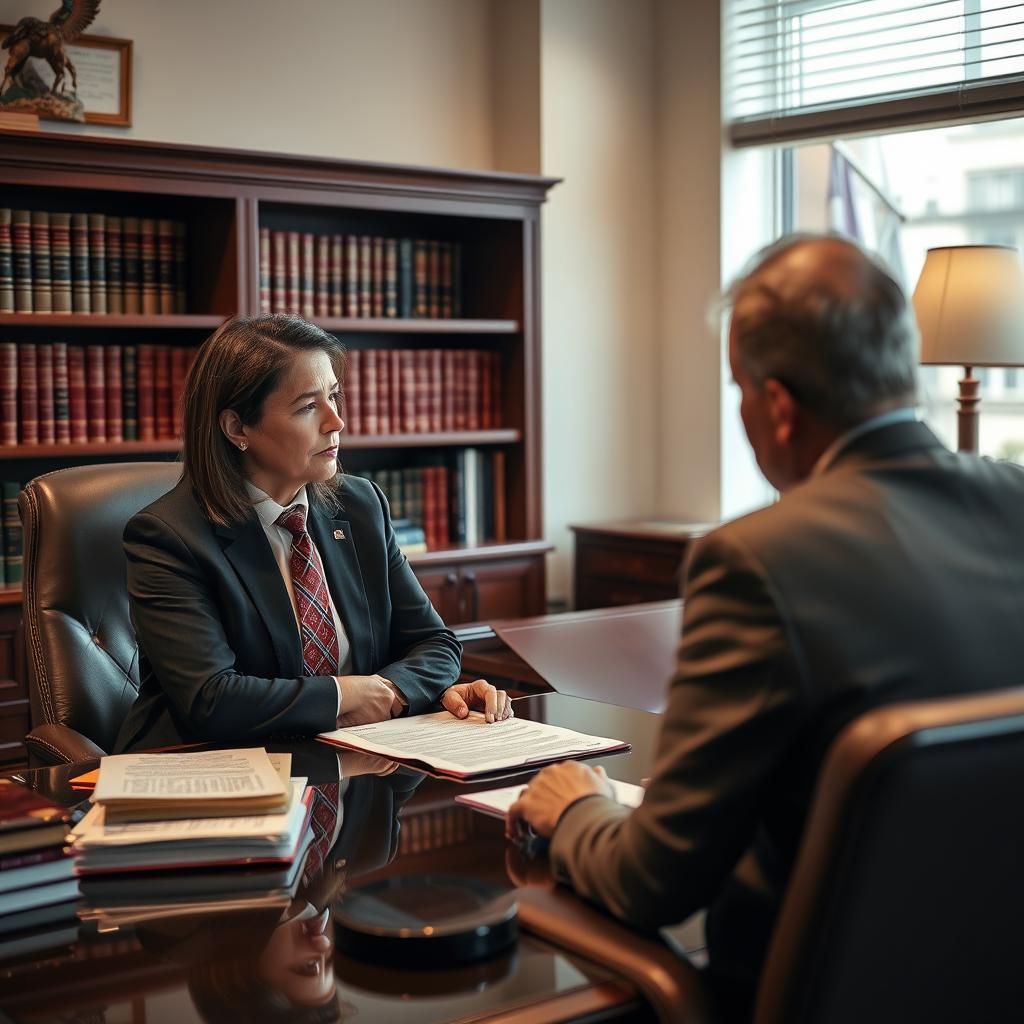
Destruction or Falsification of Records lawyer New Kent County, VA
Under Title 18 of the United States Code, destruction or falsification of records that relates to a federal investigation, a matter within federal jurisdiction, or a federally regulated activity is a serious offense. Individuals facing such charges in New Kent County, Virginia, ordinarily appear in the U.S. District Court for the Eastern District of Virginia, with proceedings often taking place in the Richmond Division. The consequences of a conviction are governed by the Federal Sentencing Guidelines and the specific statutory provision under which the government proceeds, and federal law provides no opportunity for parole. A person accused of destroying or falsifying records needs an attorney who concentrates on federal criminal defense and who is familiar with the practices of the U.S. Attorney’s Office for the Eastern District of Virginia. Reach Law Offices Of SRIS, P.C. at (888) 437-7747 to discuss your situation. Law Offices Of SRIS, P.C. – Advocacy Without Borders.
What Destruction or Falsification of Records Means in New Kent County
Federal prosecutions for destruction or falsification of records can arise from a wide range of conduct: shredding documents sought by a grand jury subpoena, altering electronic files during a criminal investigation, fabricating records to obstruct a regulatory inquiry, or any intentional act that impairs the integrity of records subject to federal oversight. The common thread is that the government alleges a knowing alteration or concealment of information, often in connection with an existing or anticipated federal matter.
Because the alleged offense touches a federal interest, the case is not heard in New Kent County’s state courts—such as the New Kent County General District Court or Circuit Court—but in the U.S. District Court for the Eastern District of Virginia. For residents of New Kent County, Providence Forge, Quinton, and surrounding communities, the closest federal courthouse is typically the Richmond Division. Our Richmond location represents clients throughout these communities, and Mr. Sris and his Of Counsel appear regularly in the Eastern District of Virginia, where they apply their in-depth understanding of the federal rules and the local procedural expectations of the judges and prosecutors who handle these cases.
The prosecution will almost always involve a federal law enforcement agency—such as the FBI, the IRS Criminal Investigation division, or another investigative arm—and the case will proceed by grand jury indictment if it involves a felony charge. From the initial appearance before a magistrate judge through any detention hearing, pretrial motions, and trial or sentencing, each stage demands a defense that accounts for the federal system’s unique discovery rules, the operation of the sentencing guidelines, and the absence of parole.
How Mr. Sris and His Of Counsel Handle Federal Records Cases
When a person comes to us with a federal destruction or falsification of records matter, the first priority is to understand exactly what records are at issue, the timing of the alleged conduct, and the specific statutory charge the government has brought or is contemplating. The defense may be shaped by whether the records were physically destroyed, electronically altered, or simply withheld; by whether the defendant acted with corrupt intent or under an innocent, mistaken belief; and by whether the government can meet its burden of proving the connection between the act and a federal proceeding.
Our approach emphasizes thorough pretrial preparation. We examine the government’s evidence for weaknesses in chain of custody, compliance with search and seizure law, and the reliability of digital forensic analysis. We assess whether the prosecution can establish the requisite mens rea for the charged offense. Where the circumstances warrant, we negotiate with the U.S. Attorney’s Office to explore alternatives to trial, including pretrial diversion or a plea to a lesser included offense that reduces the sentencing exposure under the guidelines. If trial is the trusted course, Mr. Sris and his Of Counsel draw on extensive courtroom experience to present a focused defense.
Because federal sentencing is governed by the advisory Federal Sentencing Guidelines, an early and accurate guidelines calculation is critical. We work to ensure that the court considers all applicable downward departures and variances, and that any sentence imposed is no greater than necessary under the factors set out in 18 U.S.C. § 3553(a). Throughout the process, the client receives a clear explanation of the charges, the potential penalties, and the strategic decisions that must be made at each stage.
About Mr. Sris and His Of Counsel Team
Mr. Sris, Owner and Founder of Law Offices Of SRIS, P.C., is a former prosecutor who has concentrated his practice on criminal defense since founding the firm in 1997. He is admitted in Virginia, Maryland, the District of Columbia, New Jersey, and New York, and he personally oversees every federal criminal matter accepted by the firm. His team of Of Counsel attorneys brings substantial collective experience in federal court, including experience with document-intensive investigations, complex discovery motions, and federal sentencing advocacy. The firm’s consistent presence in the Eastern District of Virginia means that we know the local practices of the court and the U.S. Attorney’s Office, enabling us to navigate your case efficiently.
Mr. Sris testified before the Virginia House Courts of Justice Committee in support of 2019 HB 635 (chief patron Del. David Bulova). This experience reflects his long-standing engagement with the legal system and his commitment to the communities he serves. Past results do not guarantee a similar outcome; every case is decided on its own facts.
Frequently Asked Questions
How does a Virginia lawyer defend against destruction or falsification of records charges?
Defense strategies in federal records cases often center on challenging the government’s proof of intent, the nexus between the act and a federal matter, and the reliability of forensic evidence. An experienced attorney evaluates whether the destruction or alteration actually occurred, whether the defendant acted knowingly, and whether any exception or lawful justification applies. In many cases, the defense also scrutinizes the government’s compliance with the Fourth Amendment and the Federal Rules of Criminal Procedure. If procedural violations are identified, the defense may move to suppress evidence or dismiss the indictment. In addition, presenting mitigating circumstances during the sentencing phase can significantly affect the ultimate outcome. For guidance on your specific situation, reach Law Offices Of SRIS, P.C. at (888) 437-7747.
What should I do if I am facing destruction or falsification of records charges in Virginia?
The most important step is to secure experienced federal criminal defense counsel immediately and to refrain from making any statements to law enforcement without your attorney present. Do not discuss the case with anyone other than your lawyer. Preserve every potentially relevant document, email, or electronic record, but do not attempt to alter or delete anything—doing so may create additional exposure. The statute of limitations and pretrial deadlines demand prompt action; delay can close off valuable defense opportunities. Contact Mr. Sris and his Of Counsel at (888) 437-7747 for a consultation on the particular facts of your case.
What are the penalties for destruction or falsification of records under federal law?
Penalties vary depending on the specific statute charged—obstruction of justice provisions, such as 18 U.S.C. § 1503 or § 1512, carry statutory maximums that can range from 10 to 20 years of imprisonment. Other Title 18 provisions may apply depending on the nature of the records. Under the Federal Sentencing Guidelines, a judge determines the advisory guideline range by assessing the offense level and the defendant’s criminal history category. Because there is no parole in the federal system, any term of imprisonment is served substantially as imposed, with limited good-conduct credit. Monetary fines, restitution, and terms of supervised release are also common. Each case is unique; the specific exposure depends on the charging instrument, the evidence, and any applicable sentencing enhancements. Results vary.
Do I need a lawyer for a federal records charge in Virginia?
Yes—federal prosecutors routinely secure convictions in more than nine out of ten cases that proceed to trial, and an unrepresented defendant faces an overwhelming disadvantage. The federal court system imposes strict procedural requirements, complex discovery rules, and sentencing guidelines that are difficult to navigate without experienced counsel. A lawyer who concentrates in federal criminal defense can move to suppress evidence obtained in violation of the Constitution, negotiate with the U.S. Attorney’s Office for a favorable resolution, and present a compelling argument at sentencing. To discuss the details of your matter, contact Law Offices Of SRIS, P.C. at (888) 437-7747.
How does the federal court process work for a records case in New Kent County?
If you are charged with a federal crime arising from conduct in New Kent County, the case will proceed in the U.S. District Court for the Eastern District of Virginia, typically with initial hearings before a magistrate judge in the Richmond Division. The process begins with an arrest or a summons, followed by an initial appearance where charges are read and bail is addressed. If the charge is a felony, a grand jury must return an indictment. The defendant is then arraigned, and a scheduling order is entered. Discovery occurs under the federal rules, and pretrial motions—such as motions to suppress evidence or to dismiss the indictment—are resolved by the district judge. If the case does not resolve by plea, it proceeds to jury trial. Sentencing occurs after a conviction or plea, guided by the Federal Sentencing Guidelines. Every step requires careful legal judgment, and knowledgeable counsel can make a critical difference at each stage. For a consultation, reach Mr. Sris and his Of Counsel at (888) 437-7747.
What is the difference between state obstruction and federal destruction of records charges?
State obstruction charges are prosecuted in Virginia’s General District or Circuit Courts and carry penalties under the Virginia Code, while federal destruction of records charges are prosecuted by the U.S. Attorney in federal district court, with generally more severe sentencing structures and no parole. State charges often arise from interference with a state criminal investigation or a local proceeding, whereas federal charges typically involve a nexus to a federal investigation, a federal agency, or a matter that falls within federal jurisdiction. The procedural rules, evidentiary standards, and sentencing regimes differ substantially, making it essential to retain counsel with specific experience in the court system where the charge is pending. Reach Law Offices Of SRIS, P.C. at (888) 437-7747 to talk about your situation.
Federal Criminal Lawyer pages in nearby localities: Fairfax County federal criminal lawyer | Fairfax City federal criminal lawyer | Falls Church federal criminal lawyer | Prince William County federal criminal lawyer | Manassas federal criminal lawyer
Primary sources: Title 18 of the U.S. Code | U.S. District Court, Eastern District of Virginia | Virginia Judicial System
Attorney advertising. Prior results do not guarantee a similar outcome. Results may vary.
Case results depend on a variety of factors unique to each case.