
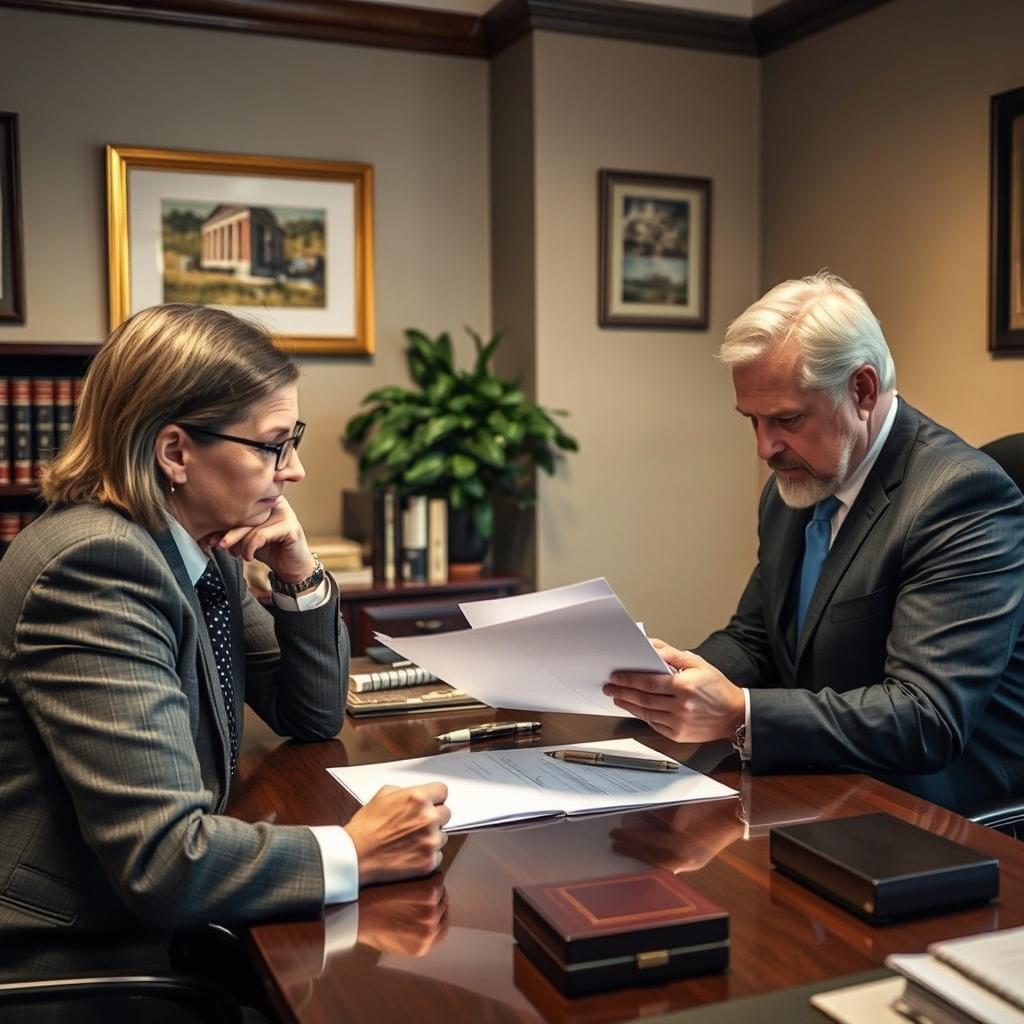
Distribution of Controlled Substances lawyer Colonial Heights, VA
Federal distribution of controlled substances charges in Colonial Heights, Virginia, place the accused under the weight of the U.S. Sentencing Guidelines, with mandatory minimum sentences and no possibility of parole. Cases arising in Colonial Heights are prosecuted in the U.S. District Court for the Eastern District of Virginia, Richmond Division—a federal forum with its own procedural rules and expectations. Mr. Sris and his Of Counsel team represent individuals facing these charges, drawing on decades of combined criminal defense experience in federal courtrooms. Whether the allegations involve cocaine, methamphetamine, fentanyl, heroin, or other controlled substances, a thorough defense that challenges the government’s evidence and procedural compliance is critical. Law Offices Of SRIS, P.C. maintains a Richmond Location at 7400 Beaufont Springs Drive, Suite 300, Room 395, Richmond, VA 23225, readily accessible to Colonial Heights residents via I‑95 and Route 144. To discuss your situation, call (888) 437‑7747. Law Offices Of SRIS, P.C. – Advocacy Without Borders.
What Distribution of Controlled Substances Means in Colonial Heights, VA
The federal offense of distribution of controlled substances is prosecuted under 21 U.S.C. § 841. Unlike state drug charges, these cases are handled by the United States Attorney’s Office in the Eastern District of Virginia, and the applicable sentencing framework is the advisory U.S. Sentencing Guidelines. Because the Eastern District of Virginia has one of the fastest federal dockets in the country, timely preparation of a defense after an indictment or arrest is essential. The charge covers not only actual distribution but also possession with intent to distribute, manufacturing, and dispensation of controlled substances. The government must prove beyond a reasonable doubt that the accused knowingly or intentionally engaged in the prohibited conduct.
In Colonial Heights, federal investigations are typically led by agencies such as the DEA, FBI, ATF, or IRS‑Criminal Investigation Division. A grand jury indictment is required for felony prosecutions, and the case proceeds through the Richmond Division of the U.S. District Court for the Eastern District of Virginia, located at 701 E. Broad Street, Richmond, VA 23219. Federal court process includes an initial appearance, a detention hearing, and arraignment before a magistrate judge. Because there is no parole in the federal system, even a modest sentence can translate into years of actual incarceration. The presence of mandatory minimum penalties tied to drug type and quantity can severely restrict judicial discretion.
Under 21 U.S.C. § 841, mandatory minimum sentences for federal drug trafficking are triggered by drug type and quantity: for example, 5 grams of crack cocaine or 500 grams of powder cocaine can carry 5 to 40 years imprisonment, increasing to 10 years to life if death or serious bodily injury results; 28 grams of crack cocaine or 5 kilograms of powder cocaine can result in 10 years to life.
Source: 21 U.S.C. § 841. Cornell Legal Information Institute
Reviewed by Mr. Sris, admitted in VA/MD/DC/NJ/NY.
How Mr. Sris and His Of Counsel Handle Distribution of Controlled Substances Cases
Mr. Sris and his Of Counsel approach federal distribution cases by first examining the government’s evidence for constitutional and procedural weaknesses. In many federal drug prosecutions, the case relies on electronic surveillance, wiretap evidence, informant testimony, or controlled buys. Each of those sources requires strict compliance with federal law, and a challenge to the chain of custody, the validity of a search warrant, or the voluntariness of a statement can produce favorable pre‑trial outcomes. Defense counsel also evaluate whether the government’s theory of the case overstates the defendant’s role—charging distribution when the evidence supports only simple possession, for instance.
Early engagement with the U.S. Attorney’s Office is often productive in federal drug cases. When the circumstances warrant, the defense may present mitigating information before indictment, discuss cooperation avenues, or negotiate for a reduced charge. Mr. Sris and his Of Counsel team have experience navigating the federal pretrial process, including advocating for release on conditions at the detention hearing and preparing the defendant for the presentence interview. At every stage, the focus remains on building a defense tailored to the specific facts, the substance involved, and the applicable sentencing guideline range.
About Mr. Sris and His Of Counsel Team
Mr. Sris, Owner and Founder of Law Offices Of SRIS, P.C., has been practicing law since 1997. A former prosecutor, his experience on both sides of the courtroom equips him to anticipate the prosecution’s strategy in federal drug distribution cases. Mr. Sris testified before the Virginia House Courts of Justice Committee in support of 2019 HB 635 (chief patron Del. David Bulova). He is admitted to practice in Virginia, Maryland, the District of Columbia, New Jersey, and New York, giving the firm multi‑jurisdictional reach that is particularly valuable in federal practice, where cases may involve conduct crossing state lines.
Mr. Sris works alongside his Of Counsel team, a group of experienced attorneys who contribute their own backgrounds—including trial advocacy, federal motion practice, and investigative assessment—to every representation. Together, Mr. Sris and his Of Counsel bring over 120 years of combined legal experience to federal criminal defense matters. Results may vary. Law Offices Of SRIS, P.C. has documented 4,739+ case results since 1997.
Frequently Asked Questions
What is the difference between state and federal drug distribution charges?
Federal drug distribution charges are prosecuted by the U.S. Attorney’s Office and carry the potential for significantly longer sentences under the U.S. Sentencing Guidelines, with no parole and mandatory minimum penalties that depend on the drug type and quantity involved. State charges, by contrast, are addressed in Virginia’s General District or Circuit Courts and offer the possibility of earned sentence credits and parole. The investigative agencies also differ; federal cases often involve multi‑agency task forces with broader resources.
How do federal sentencing guidelines work in a drug distribution case?
The U.S. Sentencing Guidelines calculate a sentencing range based on the offense level—driven heavily by drug type and quantity—and the defendant’s criminal history category. While the guidelines are advisory after United States v. Booker, courts must still calculate them and consider them seriously. Mandatory minimum statutes can override the guideline range if triggered. Departures and variances are possible through arguments such as acceptance of responsibility, substantial assistance to the government, or safety‑valve eligibility in certain cases.
Do I need a federal criminal defense lawyer for a distribution charge in Colonial Heights?
Yes; federal drug distribution cases involve procedures and sentencing rules that are distinct from Virginia state court practice, and the consequences of a conviction can be life‑altering. An attorney with federal experience can assess the government’s evidence, file motions to suppress, negotiate with the U.S. Attorney’s Office, and present a compelling argument at sentencing. Early representation—ideally before indictment—can influence the direction of the investigation.
What should I do if I am facing a federal distribution of controlled substances investigation?
Do not speak with law enforcement without an attorney present, and preserve all documents and records that may be relevant. Federal agents may attempt to interview you before formal charges are filed; anything you say can be used against you. Contact a lawyer experienced in federal criminal defense immediately so that counsel can protect your rights, advise you on cooperation or proffer agreements, and, if charges are filed, begin building your defense.
How do federal drug cases involving mandatory minimums impact sentencing?
Mandatory minimum sentencing laws require the judge to impose at least a set number of years in prison when certain drug types and quantities are involved, regardless of other mitigating circumstances. For example, a conviction for distributing five grams or more of crack cocaine triggers a five‑year mandatory minimum. There are limited statutory exceptions, including the safety‑valve provision and substantial‑assistance motions from the government, but these are not automatically available. Understanding whether a mandatory minimum applies is one of the first priorities in assessing a federal distribution case.
Can a federal distribution charge be reduced to a lesser offense?
It is possible to negotiate a reduction from distribution to simple possession or to a lesser‑included offense, depending on the strength of the government’s evidence and the defendant’s role in the alleged conduct. In some cases, counsel may persuade the U.S. Attorney that the evidence supports only a charge of using a communication facility, maintaining a drug‑involved premises, or another offense with a lower statutory maximum. The decision rests with the prosecutor, but a well‑prepared defense that highlights weaknesses in the government’s case can create the leverage necessary for such a resolution.
For guidance on your specific situation, reach Law Offices Of SRIS, P.C. at (888) 437‑7747.
Explore related federal criminal defense pages: Federal Criminal Lawyer Fairfax County · Federal Criminal Lawyer Fairfax City · Federal Criminal Lawyer Prince William County
For official primary source information, visit: Virginia Code Title 13.1 · Virginia’s Judicial System
Attorney advertising. Prior results do not guarantee a similar outcome. Case results depend on a variety of factors unique to each case. Results may vary.