
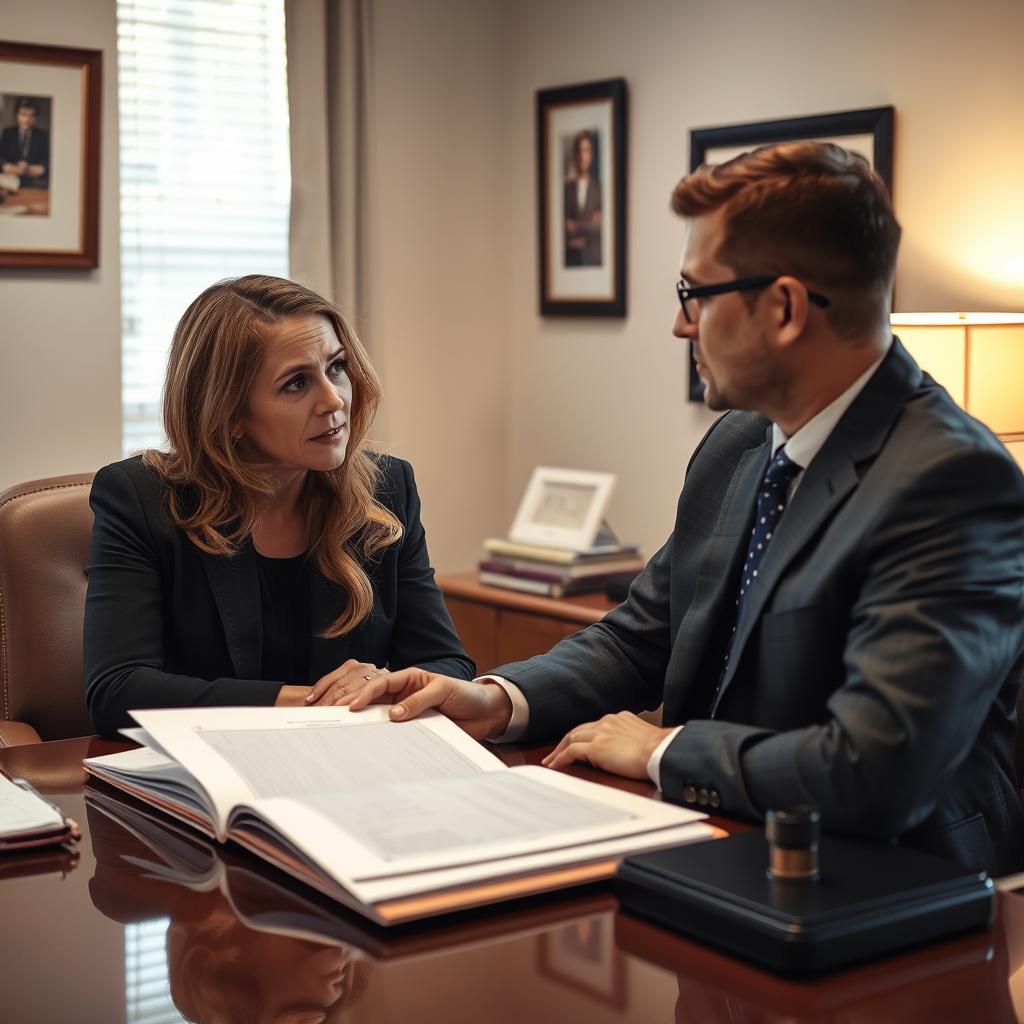
Failure to Register as a Sex Offender lawyer Roanoke County, VA
Facing a federal charge for failure to register as a sex offender in Roanoke County brings the full weight of the U.S. Department of Justice against you. Federal prosecutors in the Western District of Virginia pursue these cases actively, often seeking substantial prison time and lifetime registration obligations. The consequences of a conviction under 18 U.S.C. § 2250 extend far beyond criminal penalties — they can limit where you live, where you work, and your ability to be with your family. If you have been indicted, or if investigators from the U.S. Marshals Service, the FBI, or other federal agencies have contacted you, the steps you take now matter. Mr. Sris, Owner and Founder of Law Offices Of SRIS, P.C., is a former prosecutor who concentrates on federal criminal defense. He and his Of Counsel team appear regularly in the U.S. District Court for the Western District of Virginia and are prepared to protect your rights at every stage of the federal process. To request a consultation, reach the firm at (888) 437-7747. Law Offices Of SRIS, P.C. – Advocacy Without Borders.
What Federal Failure to Register Charges Mean in Roanoke County
Under the Sex Offender Registration and Notification Act (SORNA), codified at 18 U.S.C. § 2250, it is a federal crime for a person required to register under state or tribal law to travel in interstate or foreign commerce and knowingly fail to register or update a registration. The statute applies broadly, and federal prosecutors in the Western District of Virginia — including those in the Roanoke division — have significant discretion to bring charges. When a case originates in Roanoke County, the matter proceeds through the U.S. District Court for the Western District of Virginia, whose main Roanoke courthouse is located at 210 Franklin Road SW. This court handles all federal criminal matters for the region, from initial appearance through trial and sentencing.
The investigative process in these cases often involves multiple agencies. Federal failure-to-register investigations may be conducted by the U.S. Marshals Service, which administers the federal sex offender registry, or by the FBI, with support from local law enforcement. The U.S. Attorney’s Office will present evidence to a grand jury, and if an indictment is returned, the defendant faces federal sentencing under the United States Sentencing Guidelines. The guidelines provide for offense-level enhancements and criminal history calculations that can yield severe recommended sentences. Critically, there is no parole in the federal system; any term of incarceration must be served except for limited good-time credit.
How Mr. Sris and His Of Counsel Handle These Cases
Mr. Sris and his Of Counsel bring extensive combined legal experience to federal criminal matters, including failure-to-register prosecutions. When a client retains the firm, the team begins by examining every procedural and substantive aspect of the government’s case: whether the underlying registration requirement is valid, whether the travel element is satisfied, and whether the alleged failure was knowing rather than inadvertent. Early engagement with the U.S. Attorney’s Office can affect the charges that are brought, influence detention determinations, and open the door to pretrial resolution.
If the case proceeds to trial, Mr. Sris and his Of Counsel will challenge the government’s evidence, cross-examine witnesses, and present a defense tailored to the specific facts. Many federal failure-to-register cases involve nuanced questions of statutory interpretation — for example, whether certain state convictions actually trigger SORNA’s requirements, or whether the defendant’s travel falls within the jurisdictional element. The firm also works extensively on sentencing advocacy, including arguments for downward departures or variances under the sentencing guidelines. Throughout the process, the goal is to achieve the most favorable outcome possible given the unique circumstances of each case. Results may vary.
About Mr. Sris and His Of Counsel Team
Mr. Sris, Owner and Founder of Law Offices Of SRIS, P.C., is a former prosecutor who has focused his practice on criminal defense since founding the firm in 1997. He is admitted to practice in Virginia, Maryland, the District of Columbia, New Jersey, and New York. Mr. Sris testified before the Virginia House Courts of Justice Committee in support of 2019 HB 635 (chief patron Del. David Bulova). His background gives him insight into how prosecutors build federal cases and how to identify weaknesses in the government’s theory.
In federal criminal matters, Mr. Sris is supported by a team of Of Counsel attorneys who also concentrate on federal defense work. This collective approach means the firm can bring a breadth of analytical and courtroom resources to a federal failure-to-register case — from reviewing discovery and researching legal issues to preparing for sentencing hearings. The team understands the practices and expectations of the U.S. Attorney’s Office in the Western District of Virginia and works to ensure that each client’s side of the story is presented clearly and effectively. The firm’s Shenandoah Location at 505 N Main Street, Suite 103, Woodstock, VA 22664, serves clients throughout Roanoke County, including Salem, Vinton, Cave Spring, and Hollins. By appointment. Call (888) 437-7747 to schedule.
Frequently Asked Questions
What is the federal law on failure to register as a sex offender?
The federal law that makes it a crime to fail to register as a sex offender is 18 U.S.C. § 2250, part of the Sex Offender Registration and Notification Act (SORNA). This statute applies to individuals who have been convicted of a sex offense and are required to register under state or tribal law. A person violates the law if they travel in interstate or foreign commerce and knowingly fail to register or update a registration as required. The jurisdictional element — that the person traveled in interstate commerce — can be satisfied in many ways, including moving from one state to another or even traveling across state lines for a short period. Because the requirements of SORNA are technical, an experienced attorney can examine whether the specific registration obligation actually applies and if the travel element is properly alleged.
What are the potential penalties for a federal failure-to-register conviction?
A conviction under 18 U.S.C. § 2250 carries the possibility of a lengthy federal prison sentence, substantial fines, and a term of supervised release. The specific sentence depends on the federal sentencing guidelines and the particular facts of the case, including the defendant’s criminal history and any aggravating factors. In addition, a conviction will result in continued or enhanced sex offender registration requirements and can impose collateral consequences on employment, housing, and family life. Because the federal system has no parole, any incarceration sentence is served almost entirely in full, with only limited good-time credit available. Results may vary. each case is unique.
Do I need a lawyer for a failure-to-register charge in Roanoke County?
Yes, anyone facing a federal failure-to-register charge in Roanoke County should have experienced defense counsel. Federal criminal proceedings are complex, and the U.S. Attorney’s Office prosecutes these cases with experienced trial lawyers. An attorney can evaluate the strength of the government’s evidence, identify possible constitutional or statutory challenges, and negotiate with prosecutors. Early representation can also influence pretrial detention decisions and help preserve evidence. Proceeding without counsel — or with an attorney unfamiliar with the Western District of Virginia’s practices — can put you at a serious disadvantage. To discuss your situation, reach Law Offices Of SRIS, P.C. at (888) 437-7747.
What should I do if I am under investigation for failure to register?
If you learn that federal agents are investigating you for failure to register, you should not speak with them without an attorney present. Federal agents are trained interrogators, and anything you say can be used to build the case against you. Politely decline to answer questions and state that you want to speak with counsel. Do not attempt to explain your side of the story or offer documents without legal advice. Contact a defense lawyer promptly; the earlier an attorney can intervene, the better the chances of shaping the investigation or controlling the narrative. Preserve all documents and records that may be relevant, but do not share them with anyone except your lawyer.
Can a failure-to-register charge be fought at trial?
Yes, a federal failure-to-register charge can be contested at trial, and the government must prove every element beyond a reasonable doubt. Potential defenses may include showing that the defendant did not knowingly fail to register, that the underlying conviction does not actually trigger SORNA’s requirements, or that the interstate travel element is not satisfied. Other challenges can relate to the validity of the indictment, the admissibility of evidence, or procedural violations during the investigation. Mr. Sris and his Of Counsel evaluate each case individually to determine the most appropriate strategy, whether that involves negotiating a resolution or preparing for trial.
Virginia legal resources: Virginia Code | Virginia Court System
Attorney advertising. Prior results do not guarantee a similar outcome. Results may vary. Case results depend on a variety of factors unique to each case.