
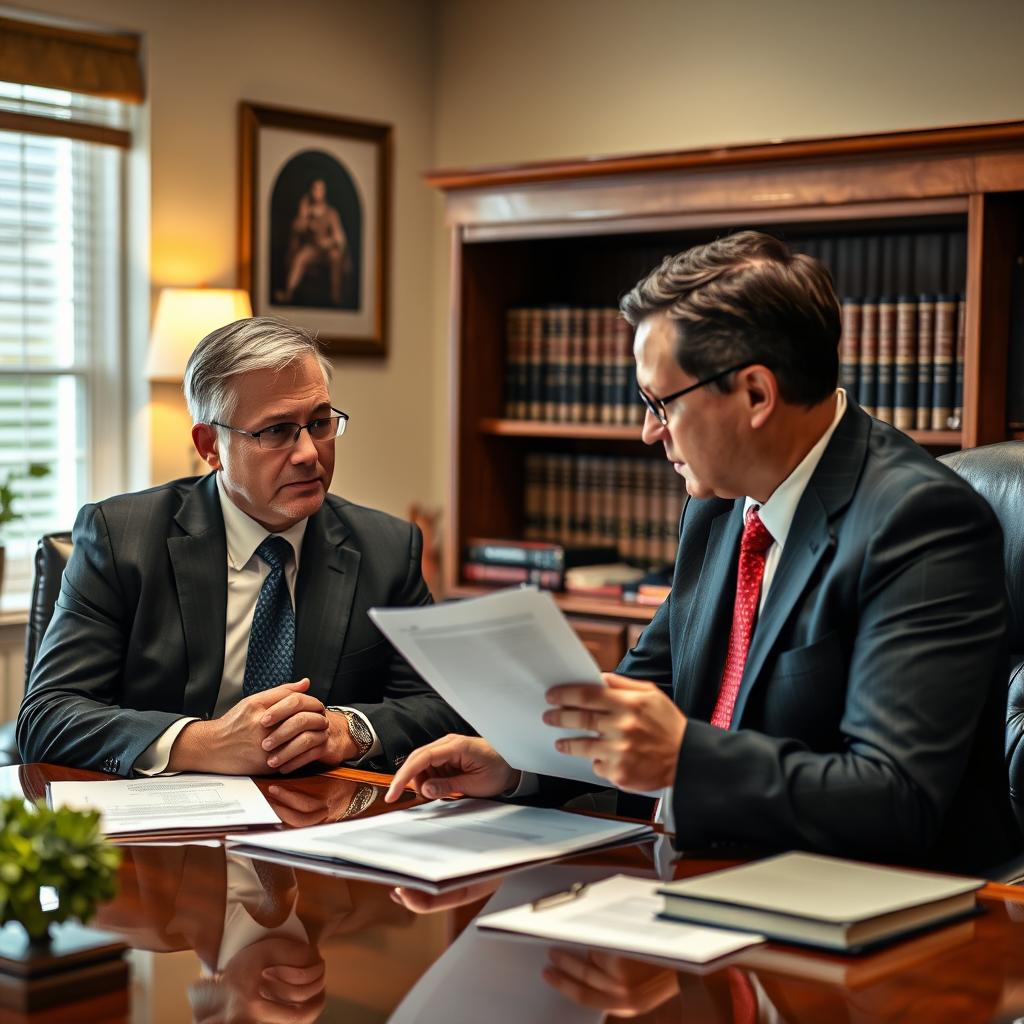
Subornation of Perjury lawyer Prince George County, VA
A federal subornation of perjury charge arises when a person is accused of procuring or inducing another to commit perjury—to lie under oath in an official proceeding. In Virginia, the U.S. Attorney’s Office prosecutes these cases under federal perjury and obstruction-of-justice statutes, including 18 U.S.C. §§ 1621‑1623 and 18 U.S.C. § 1503. A conviction under the obstruction statute can carry a sentence of up to ten years, or twenty years if the conduct involves killing, while the perjury statutes carry substantial prison time. Because the federal system has no parole, the stakes are high from the outset. Matters arising in Prince George County are heard in the U.S. District Court for the Eastern District of Virginia, Richmond Division. Mr. Sris and his Of Counsel represent clients facing subornation of perjury and related federal charges throughout the region. To discuss your situation, call Law Offices Of SRIS, P.C. at (888) 437-7747.
What Subornation of Perjury Means in Prince George County
Subornation of perjury is a distinct federal offense that targets the person who corruptly persuades another to give false testimony, rather than the witness who tells the falsehood. It strikes at the integrity of the justice system itself. Because the alleged conduct typically arises in connection with a federal investigation, grand jury proceeding, or trial, it is charged together with the underlying perjury and often with obstruction of justice. Federal investigators—most commonly the FBI—will build a case around communications, statements under oath, and patterns of conduct that suggest a deliberate effort to subvert the truth-telling process.
In Prince George County, a federal subornation matter does not stay in the county courthouse. Instead, it moves into the U.S. District Court for the Eastern District of Virginia, which sits in Richmond for cases originating in this part of the state. The Assistant U.S. Attorney assigned to the case will evaluate evidence gathered by federal agents and may seek a grand jury indictment. Under the Speedy Trial Act, the government generally must indict within 30 days of arrest and bring the case to trial within 70 days of indictment, though many delays are excluded by statute. Our Richmond Location—about 25 minutes east of Petersburg along I‑295—handles federal criminal matters for Prince George County residents. Our attorneys are familiar with the procedures, judges, and expectations of the Eastern District, and we use that knowledge to build a focused defense from the intake call onward.
How Mr. Sris and His Of Counsel Handle Subornation of Perjury Cases
A federal subornation charge puts in play years of potential imprisonment, and it requires an attorney who is comfortable inside a federal courtroom. Mr. Sris, a former prosecutor, knows how the government constructs a perjury‑related case. He and his Of Counsel team begin by demanding full discovery from the U.S. Attorney’s Office—every statement, recording, email, and grand‑jury transcript that might bear on the allegation. They examine whether the government can prove the essential elements: that the defendant knowingly and corruptly induced false testimony, and that the testimony was in fact false and material to the proceeding in which it was given.
Defense strategy often turns on the mental state of the accused. If the client believed the testimony was true, or if the communication was not intended to cause perjury, the prosecution may not be able to meet its burden. The team also scrutinizes the investigative process for violations of the Fourth, Fifth, or Sixth Amendments, and wherever possible files pretrial motions to suppress evidence or dismiss charges. Because federal sentencing is governed by the United States Sentencing Guidelines, early preparation for the sentencing phase—including identifying grounds for a variance or downward departure—is woven into every step of the case. The goal is always to secure favorable outcomes, whether that is a dismissal, a plea to a lesser offense, or an acquittal at trial.
About Mr. Sris and His Of Counsel Team
Mr. Sris, Owner and Founder of Law Offices Of SRIS, P.C., has practiced law since 1997 and is admitted in Virginia, Maryland, the District of Columbia, New Jersey, and New York. As a former prosecutor, he brings a practical understanding of how federal perjury and obstruction investigations are assembled, giving his clients an edge from the very first interview. He leads a team of Of Counsel attorneys who bring extensive combined legal experience. Results may vary.
Every attorney supporting the firm’s federal criminal practice is engaged on an Of Counsel basis. This structure allows the team to deploy focused effort on each case while keeping the client’s costs proportionate to the complexity of the matter. Mr. Sris and his Of Counsel have appeared in Eastern District courtrooms throughout the Richmond Division, and they are prepared to stand beside you at every critical hearing—from the initial appearance and detention hearing through trial, if necessary.
Frequently Asked Questions
How does a Virginia lawyer defend against subornation of perjury charges?
Defense strategies for subornation of perjury in Virginia often involve challenging the government’s evidence and demonstrating that the defendant did not knowingly procure false testimony. The prosecution must prove beyond a reasonable doubt that the accused acted with corrupt intent. An experienced federal defense attorney will examine whether the allegedly false testimony was in fact material, whether the witness understood the oath, and whether any statements attributed to the accused are taken out of context. Pretrial motions to suppress improperly obtained evidence are also a key part of the defense playbook. Each case is unique; for guidance on your specific situation, reach Law Offices Of SRIS, P.C. at (888) 437-7747.
What should I do if I am facing subornation of perjury charges in Prince George County?
If you are facing subornation of perjury charges, contact a federal criminal defense attorney immediately and refrain from discussing the case with anyone except your lawyer. Do not speak to investigators, colleagues, or even family members about the facts. Anything you say can be used against you. Preserve all documents, emails, and electronic data; do not delete anything. The earlier an attorney gets involved, the more options may be available—including negotiating with the U.S. Attorney’s Office before an indictment is returned. To discuss the details of your matter, contact Law Offices Of SRIS, P.C. at (888) 437-7747.
What is the difference between state and federal perjury charges?
Federal perjury and obstruction charges are prosecuted by the U.S. Attorney’s Office and are subject to the federal sentencing guidelines, which generally result in more severe penalties than state‑level proceedings. There is no parole in the federal system; an inmate must serve at least 85 percent of the sentence imposed. Federal investigations also draw on the resources of the FBI or other national agencies, making these cases factually complex. In contrast, state perjury charges are handled by a local prosecutor and are governed by state sentencing rules that may allow for earlier release. Because of these differences, anyone facing a federal charge should seek an attorney who regularly practices in federal court.
What are the penalties for subornation of perjury in federal court?
Subornation of perjury in federal court can lead to lengthy incarceration; obstruction of justice under 18 U.S.C. § 1503 carries a maximum of ten years imprisonment, or twenty years if the conduct involves killing, while perjury offenses can result in substantial prison time. The actual sentence depends on the specific charges, the defendant’s criminal history, and the federal sentencing guidelines. Fines, supervised release, and collateral consequences such as loss of professional licenses or immigration status are also possible. A thorough evaluation by a defense attorney is essential to understand the likely sentencing range. For a consultation, reach Mr. Sris and his Of Counsel at (888) 437-7747.
Do I need a lawyer for a federal subornation of perjury investigation?
Yes, because federal investigations are complex and the stakes are high; an experienced attorney can protect your rights from the earliest stage. Even before charges are filed, investigators may seek to interview you or execute search warrants. Having counsel present helps ensure that you do not inadvertently make statements that could be misconstrued as evidence of guilt. An attorney can also communicate with the prosecution on your behalf, potentially persuading them not to seek an indictment. The sooner you involve a lawyer, the more options remain available.
How does the federal court process work in the Eastern District of Virginia?
After an investigation by a federal agency, a grand jury indictment may be issued; then the case proceeds through initial appearance, detention hearing, arraignment, discovery, motions, and trial in the U.S. District Court for the Eastern District of Virginia. The Speedy Trial Act imposes deadlines that vary by the nature of the charges, but many deadlines can be extended by agreement or by court order. Throughout the process, your attorney will evaluate the evidence, engage in plea discussions where appropriate, and prepare for trial. Sentencing, if it comes to that, takes place after a separate hearing and is largely driven by the United States Sentencing Guidelines along with judicial discretion post‑Booker. To learn how this process applies to your case, call (888) 437-7747.
Primary legal resources: Virginia Courts (official site of the Virginia judiciary).
Attorney advertising. Prior results do not guarantee a similar outcome.
Results may vary. The firm does not offer any guarantee of case results. Every case depends on its own facts and applicable law.
Case results depend on a variety of factors unique to each case.